Wandering around the web I found this new authentication scheme called OCRA (One-time Challenge Response Authentication) which responds to the specific RFC 6287.
What makes this new method particularly valuable?
Mainly it keeps security standards high and works without synchronization.
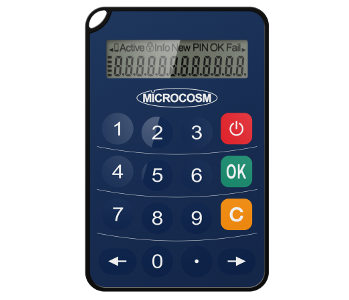
It will need to be equipped with some sort of external calculator (the token generator). If implemented in Skull Island unlocking the database would work more or less like this:
The app (Skull Island) queries the database which responds by proposing a challenge (typically 6 numeric digits).
From an already configured external generator I go to enter the challenge through the built-in button pad.
The generator "chews" and "spits out" another 6 pseudo-random digits.
Those six digits unlock the database. As soon as the session ends you will need to pass a new challenge. And the database will come up with more numbers...
That is all.
Here a conference about it:
https://www.youtube.com/watch?v=kBOhP7Hlvlg

Wandering around the web I found this new authentication scheme called OCRA (One-time Challenge Response Authentication) which responds to the specific RFC 6287.
What makes this new method particularly valuable?
Mainly it keeps security standards high and works without synchronization.
It will need to be equipped with some sort of external calculator (the token generator). If implemented in Skull Island unlocking the database would work more or less like this:
The app (Skull Island) queries the database which responds by proposing a challenge (typically 6 numeric digits).
From an already configured external generator I go to enter the challenge through the built-in button pad.
The generator "chews" and "spits out" another 6 pseudo-random digits.
Those six digits unlock the database. As soon as the session ends you will need to pass a new challenge. And the database will come up with more numbers...
That is all.
Here a conference about it:
https://www.youtube.com/watch?v=kBOhP7Hlvlg