
Replies: 4 comments 2 replies

-
|
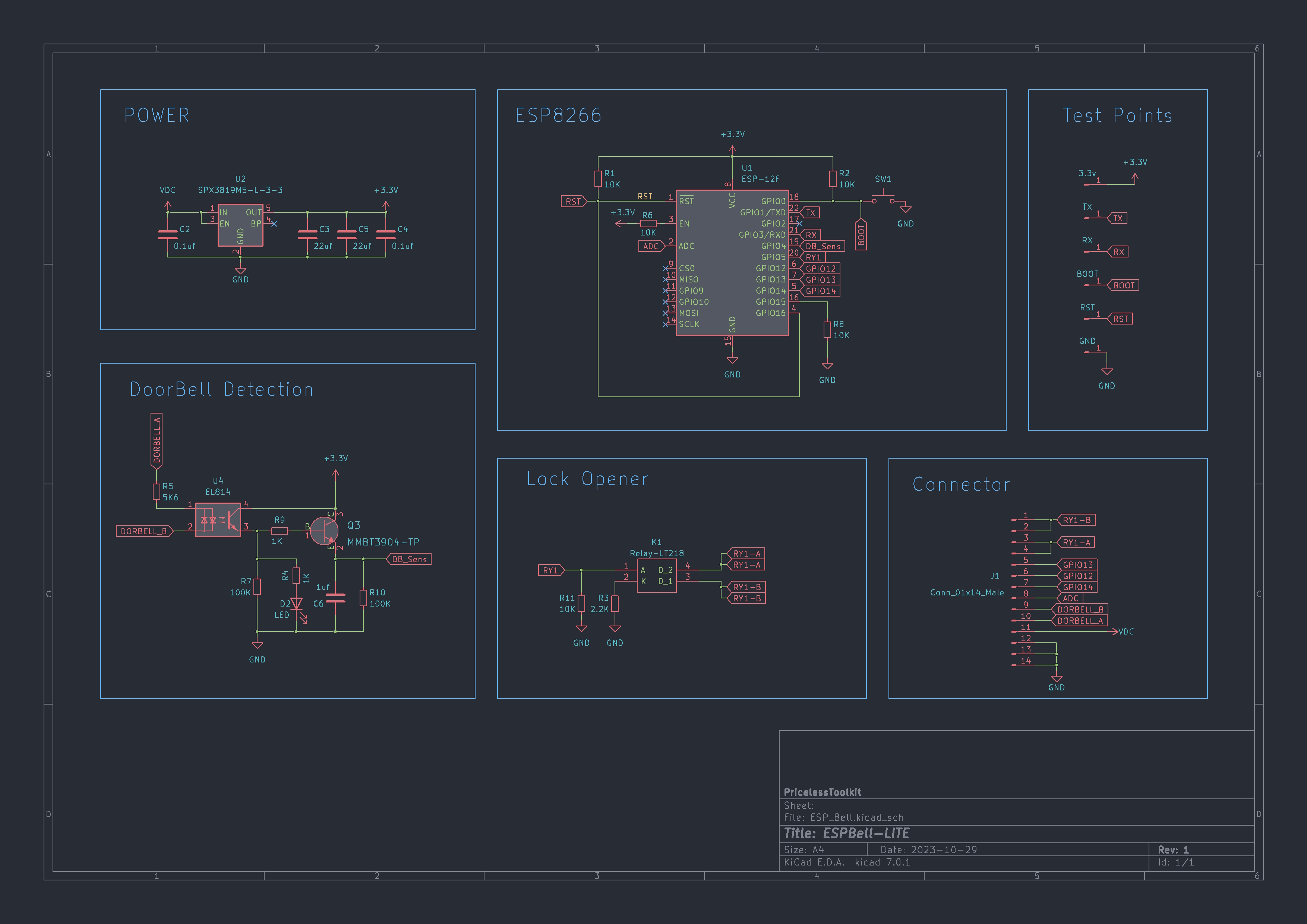
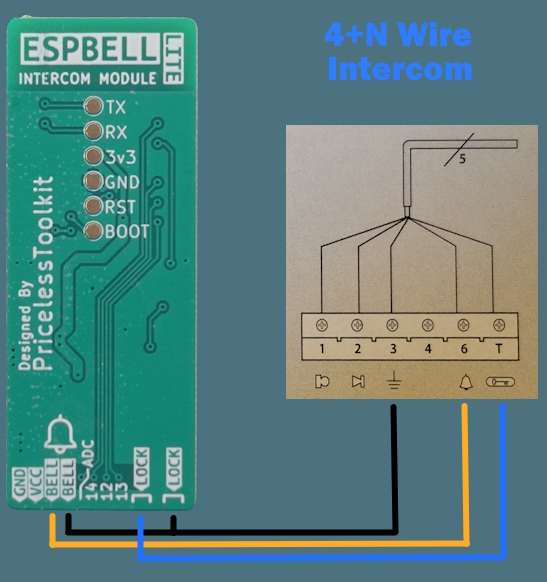
Hi neoruben, Regarding your two intercoms connected in parallel and the issue with the doorbell not being detected when both are connected, the README notes careful attention to wiring and electronics expertise is required for ESPBell-LITE, especially with intercom input circuits. Specifically about resistor R6 modification: while the README does not explicitly mention changing resistor values like R6 for parallel intercoms, it does include the schematic here for reference: If Home Assistant diagnostics point to R6 needing to be changed to 2 kΩ for proper input sensitivity, your plan to resolder that resistor is reasonable—especially since you have SMD soldering tools and experience. No additional modifications are indicated in the README for this scenario, but the input circuit depends on your intercom wiring and signals. Carefully verify with a multimeter and compare with the schematic before changing. Also, note that ESPBell-LITE currently supports only 4+N intercom systems, which could influence the behavior with parallel intercoms. More details on intercom wiring are at: For extra assurance or different setups, the Facebook Group linked in the README is a good place for community advice: In summary: Changing R6 to 2 kΩ as suggested likely will help with parallel intercom detection issues, given you confirm wiring and signals suit the ESPBell input stage. Hope this helps! ✅ If this answer helped, please close the discussion. |
Beta Was this translation helpful? Give feedback.

-
|
Hi, please first confirm that the ESPBell relay can handle both openers at the same time. Next, if it detects the doorbell when only one intercom is connected, then the problem is not in the resistor. You need to check with a multimeter if both intercom doorbell wires are high when the doorbell is pushed, and not! LOW when released. "It will short-circuit" and will not detect any HIGH signal on the wire. |
Beta Was this translation helpful? Give feedback.

-
|
This morning I was doing some testing. If I disconnect the intercom on the terrace, pressing the doorbell triggers a notification in Home Assistant, and the voltage between ground and the bell jumps from 0 to 2.3V. I repeated the same operation disconnecting the main intercom and leaving the terrace intercom connected; the result was the same: the notification activated, and the voltage jumped from 0 to 2.3V. Finally, I connected both intercoms in parallel, and that's when it failed: the notification didn't activate, and the voltage jumped from 0 to 1.1V. So, when the two intercoms are in parallel, is the voltage in the doorbell's input circuit insufficient? Should I then replace the resistor with a lower one? |
Beta Was this translation helpful? Give feedback.

-
|
Or you can try connecting 2 diodes, so one diode between each doorbell wire and ESPBell Dorbell + wire -- diod-->---| Voltage will drop, but not much, 0.4-0.7V And it's strange that it's only 2.3V and DC, normaly its AC and around 20V |
Beta Was this translation helpful? Give feedback.
-
|
Thanks for the help. In the end, I opted to change the resistor to 2.2kΩ and it worked. I have both intercoms connected in parallel, they both ring when I press the button, and the Home Assistant sensor also alerts me. My intercoms are Tegui T71 models. Thanks !! |
Beta Was this translation helpful? Give feedback.
-
|
Basically, I didn't help! You find the solution by yourself! :) |
Beta Was this translation helpful? Give feedback.


Uh oh!
There was an error while loading. Please reload this page.
-
Hello, I have two intercoms connected in parallel because I have another one on the upper terrace. When I tested the Espbell, I thought it was working correctly because Home Assistant detected it and opened the door, but it didn't detect when the doorbell rang. I tried leaving only the main intercom connected, and it works. According to Home Assistant, the problem is with resistor R6 in the input circuit, and the solution is to change it to 2kΩ. I have tools for soldering SMD components at work, but can anyone confirm if this would work or if I would need to make any further modifications? Thanks.

Beta Was this translation helpful? Give feedback.
All reactions