


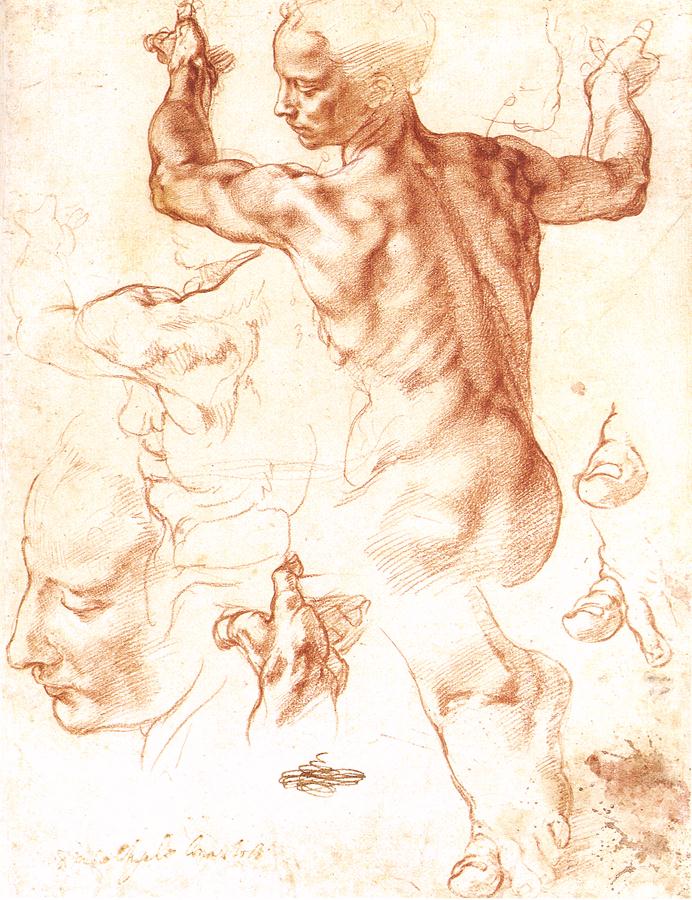
Draw the underdrawing before the plaster sets. Separate plain-language intake from isolated senior review.


"Sinopia" (Italian, from the red earth of Sinope) is the preparatory underdrawing sketched on rough plaster before wet lime makes every fresco stroke irreversible.
Sinopia (
/sinopia,/snp) is a zero-dependency pre-build counsel skill for frontier coding agents — 2 plain-text files, strictly read-only, no code changes, and no commits.
When you work inside your own core specialty, you naturally open with senior constraints and anti-goals. When you step outside your specialty — audio direction, visual pipelines, contract clauses, vendor briefs, pricing, or an unfamiliar stack — you ask casually ("Should I build X?", "How should I approach Y?").
Standard LLMs hit two compounding failure modes in that exact moment:
- Register Downshifting (Dumbing-Down Bias): Casual phrasing anchors attention to introductory tutorials, polite hedging, and generic pros/cons checklists instead of senior production scrutiny.
- Silent Over-Specification: Missing constraints — budget, timeline, target audience, anti-goals — are quietly filled with plausible-sounding guesses, causing hours or credits of rework after you start building.
Even asking "rephrase this like an expert first, then review it" inside the same conversation fails to break the anchor: the raw casual prompt and "explain it simply" cues stay in context and keep pulling the answer back toward soft brainstorming.
Sinopia splits conversation (plain language, matched to you) from judgment (isolated senior scrutiny of a refined specification) across a hard context boundary:

- Stage 1 — Intake Counsel & Mirror-Back (Main Context · Sync):
- Silently scans workspace docs (
README.md, architecture/decision files) so it never asks for facts already written down. - Clarifies only decision-critical, user-answerable unknowns in plain language — with no fixed question quota (asks 0, 1, 2, or 4 as needed, never padding to "3").
- Separates delivery preferences ("explain simply to me" → held privately for Stage 3) from design constraints ("the end users are non-technical beginners" → preserved in the Brief).
- Mandatory Mirror-Back Confirmation Gate: Summarizes what it understood in 3–6 crisp bullets and waits for your explicit confirmation before launching Stage 2 (unless you explicitly waive intake upfront, in which case unconfirmed inferences are demoted into
Explicit Unknowns). - Distills your confirmed intent into a dry, senior-to-senior Refined Specialist Brief (
Context & Confirmed Facts,Objectives,Hard Constraints,Explicit Unknowns,Domain Failure Modes) and rereads the whole brief to verify zero casual phrasing, zero tool/skill meta-framing, and zero unresolved{...}tokens.
- Silently scans workspace docs (
- Stage 2 — Blind Specialist Review (Isolated Fresh Context):
- Spawns one fresh, read-only subagent that receives only the refined Brief and review protocol — no raw user phrasing, no interview transcript, no
forkinheritance, and no delivery-level cues. - No Silent Fallback: If the host runtime cannot spawn an isolated context or fails, Sinopia stops and discloses it rather than quietly running in the main conversation.
- Handles every open unknown via explicit
If-Thenconditional branches instead of guessing, defends 1:1 against every grounded failure mode, flags empirical or taste decisions as[External Validation Required], and outputs measurable Pre-Execution QA Gates.
- Spawns one fresh, read-only subagent that receives only the refined Brief and review protocol — no raw user phrasing, no interview transcript, no
- Stage 3 — Grounded Debrief & Hard Stop (Main Context):
- Runs a bidirectional grounding audit — checking that Stage 1 did not drop or distort your original constraints/anti-goals and that Stage 2 did not invent answers for
Explicit Unknownsor soften into tutorial tone. - Delivers a conclusion-first
Go / Conditional Go / Pilot-First / No-Godebrief in{USER_LANGUAGE}at your preferred reading density — then stops cleanly with zero file edits, zero plan documents written, and zero commits.
- Runs a bidirectional grounding audit — checking that Stage 1 did not drop or distort your original constraints/anti-goals and that Stage 2 did not invent answers for
Scenario: A solo developer strong in engineering but unfamiliar with audio production asks casually: "I want to hire a composer on a tight budget for a 10-track game soundtrack — any advice before I post the job? Keep it simple."
| Approach | What the Reviewer Sees | What Happens |
|---|---|---|
| Direct Prompt (Same Thread) | Casual phrasing + "Keep it simple" + missing legal/format constraints |
Friendly 5-bullet overview ("check their portfolio, set milestones, use a contract") — misses loop-seam engineering, stem delivery, loudness specs, and buyout vs. royalty traps |
Same-Thread Rephrase (/plan or In-Context RaR) |
Rephrased spec plus the original casual prompt and "Keep it simple" |
Better checklist, but still anchored to beginner tone and quietly assumes streaming-master stereo MP3s instead of interactive game loops |
| Sinopia (Intake → Context Wall → Isolated Specialist → Debrief) | Only the refined senior brief (confirmed budget, loop engine, anti-goals, explicit unknowns, grounded audio-production failure modes) | Returns Pilot-First: catches seamless loop-tail truncation, stem/mix-bus headroom clash with SFX, and non-exclusive licensing before any 10-track deposit is paid — then explains it cleanly at the user's preferred reading level |
📄 Inspect the Refined Brief & Debrief Structure (Neutral Walkthrough Preview)
### 1. Context & Confirmed Facts
- Domain / Deliverable: 10-track adaptive background soundtrack for a desktop strategy game
- Confirmed Inputs, Audience & Assets: Fixed total budget ($2,500), 6-week window, engine supports OGG loop points
- Target Goal & Success Criteria: Distinct faction identity per track without fatiguing 40-minute play sessions
- Anti-Goals / Explicit Non-Goals: No generic trailer-orchestra walls of sound; no per-unit royalty encumbrances

### 4. Explicit Unknowns (Empirical or User-Deferred Only)
- Final SFX frequency profile: Not yet mixed; affects mid-range EQ headroom allocation

### 5. Domain Failure Modes to Evaluate
1. Loop-seam click / reverb-tail cutoff on seamless restarts
2. Mid-range loudness masking against UI alerts and voice lines
3. Ambiguous work-for-hire vs. sync-license rights blocking storefront trailers
4. Full-batch deposit before validating faction contrast on a 2-track pilotVerdict: Go | Conditional Go | Pilot-First | No-Go — 1-2 line rationale
Intent & Isolation Check: confirms Stage 1/2 stayed aligned with your real goal and constraints
1. Top Failure Modes to Prevent Before Building
- <Failure mode>: why it breaks + concrete defense rule
2. Recommended Plan & Pre-Execution QA Gates
- Recommended approach / minimal pilot
- 3-5 measurable pass/fail QA gates
- Conditional branches (IF <unknown> -> THEN <action>, only if unknowns remain)
3. External-Validation Boundaries
- Decisions requiring live metrics, pricing, or a small pilot rather than pure reasoning
- Before committing spend, batch generation, or hard-to-reverse builds — batch art/audio prompts, video formats, new architectures, or paid integrations where a bad premise wastes hours or credits.
- When directing work outside your core discipline — audio, visual direction, legal/contract review, vendor briefs, pricing, or unfamiliar stacks.
- When you want a clean
Go / Pilot-First / No-Gogate without an agent prematurely editing files or generating boilerplate plans.
Skip Sinopia for routine bug fixes, targeted code edits, straightforward lookups, or open-ended creative divergence where direct execution (or Sfumato) is a better fit.
Everything Sinopia needs lives in skill/sinopia/ — just 2 inspectable plain-text files:
SKILL.md— 3-stage intake/isolation/debrief protocol, cross-agent isolation matrix, and hard-stop rulesreferences/prompt_templates.md— language-neutral ({USER_LANGUAGE}) Refined Brief schema, Blind Specialist invocation prompt, and Counsel Debrief structure
Clone the repository, inspect both files, and run the local installer — or install directly inside Claude Code from this repository's marketplace manifest:
# Claude Code (one-step marketplace install, v2.1.275+)
/plugin install sinopia --marketplace Excelsus4/sinopia
git clone https://github.com/Excelsus4/sinopia.git && cd sinopia
# macOS / Linux / Git Bash
bash tools/install.sh --dry-run
bash tools/install.sh --target claude # claude | agy | codex | all | auto
bash tools/install.sh --target agy --agy-mode plugin # default for agy (or --agy-mode skill)# Windows PowerShell 5.1+ / PowerShell 7
powershell -ExecutionPolicy Bypass -File tools\install.ps1 -DryRun
powershell -ExecutionPolicy Bypass -File tools\install.ps1 -Target allManual copy alternative (no installer script)
Remove any previous sinopia folder before copying so cp -r does not nest sinopia/sinopia:
# Claude Code (+ /sinopia and /snp slash commands)
mkdir -p ~/.claude/skills ~/.claude/commands
rm -rf ~/.claude/skills/sinopia
cp -r skill/sinopia ~/.claude/skills/sinopia
cp commands/*.md ~/.claude/commands/

# Antigravity (agy) — skill mode (use tools/install.* for native plugin mode)
mkdir -p ~/.gemini/config/skills
rm -rf ~/.gemini/config/skills/sinopia
cp -r skill/sinopia ~/.gemini/config/skills/sinopia

# Codex CLI
mkdir -p ~/.codex/skills
rm -rf ~/.codex/skills/sinopia
cp -r skill/sinopia ~/.codex/skills/sinopiaOpen your coding agent in your target workspace and invoke Sinopia explicitly:
/sinopia Should we add offline sync before launching our mobile MVP?
/snp I want to commission a custom sound pack — review what could go wrong before I hire anyone
| Host | Invocation | Stage-2 Isolation Mechanism | Workspace Writes |
|---|---|---|---|
| Claude Code | /sinopia or /snp |
Fresh non-fork Agent subagent (subagent_type: "fork" explicitly forbidden) |
0 (strictly read-only) |
Antigravity (agy) |
/sinopia (plugin or skill) |
invoke_subagent (research, read-only, explicit paths only) |
0 (strictly read-only) |
| Codex CLI | sinopia skill |
codex exec --skip-git-repo-check -C <os-tempdir> -s read-only (avoids workspace AGENTS.md bleed; temp brief deleted after Stage 3) |
0 (strictly read-only) |
The repository test suite uses Python 3.9+ standard library (unittest) only:
python3 -m unittest tools/test_tools.py -vSinopia is part of a lightweight Renaissance Craft Quartet of zero-dependency agent skills — each applying strict context boundaries to a different stage of building:
| Tool | Stage | Isolation Axis | Focus |
|---|---|---|---|
Sinopia (/snp, this repo) |
Pre-build | Vertical (register isolation) | Plain-language intake + isolated senior review of a refined brief |
Sfumato (/sfm) |
Divergence | Horizontal (domain isolation) | Dual-track cross-domain ideation breaking LLM homogenization |
Senato (/snt) |
Arbitration | Stakeholder (evidence isolation) | Multi-seat trade-off deliberation with asymmetric evidence & preserved dissent |
Sprezzatura (/spz) |
Post-build QA | Cluster (evidence isolation) | Read-only fault-cluster audit catching bugs that pass local tests |
Licensed under the MIT License.

“Design (disegno) is the father of our three arts: architecture, sculpture, and painting.” — Giorgio Vasari, Le Vite (1568)
All Renaissance preparatory artworks are Public Domain via Wikimedia Commons.