Faultplane is an automated cybersecurity intelligence platform that continuously aggregates, summarizes, and classifies threat intelligence, malware analysis, data breach reports, and vulnerabilities into a lightweight static site and dashboard.
Live Platform: Faultplane
Click any thumbnail to open the full-size image in a new tab.
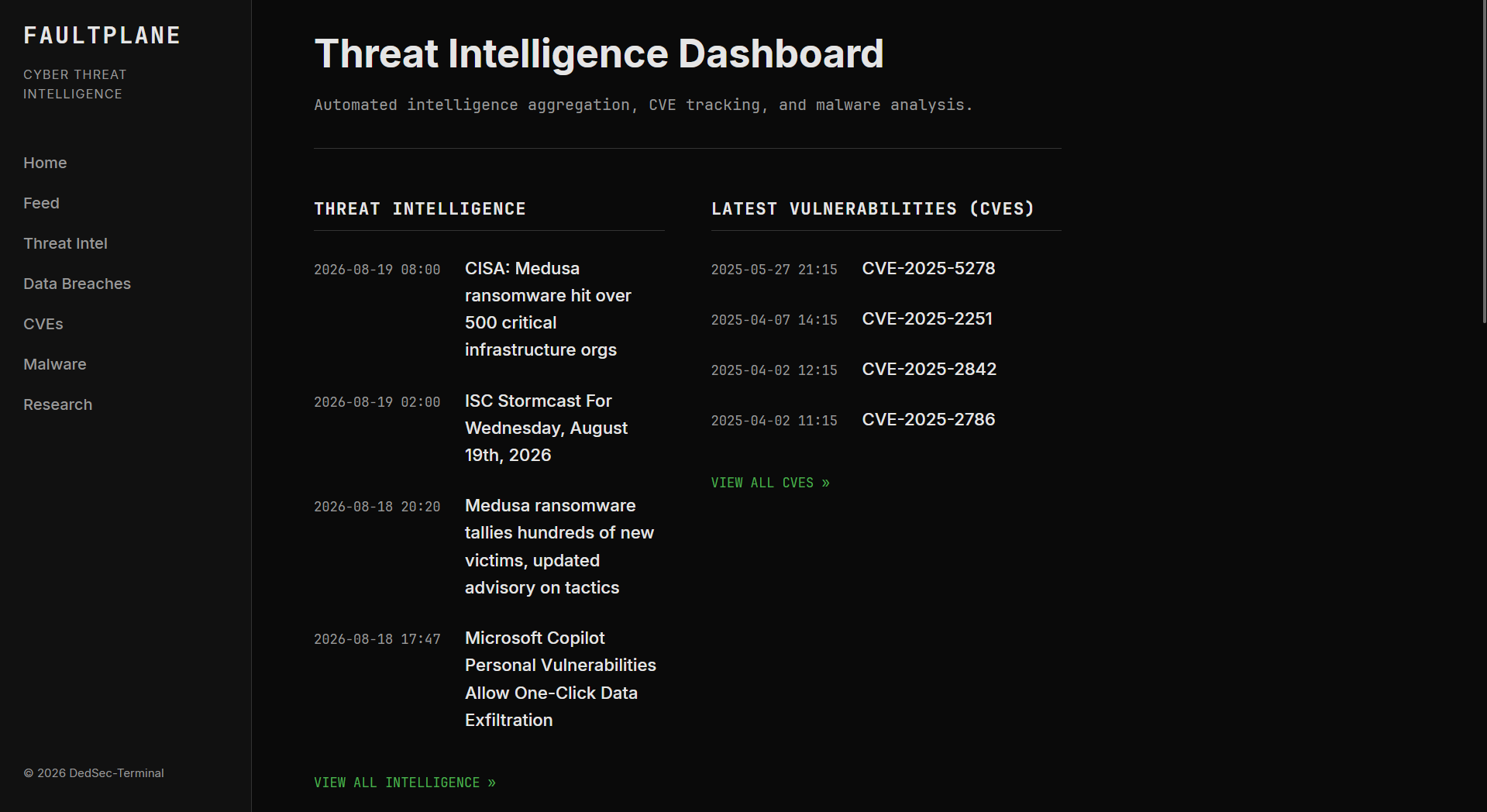
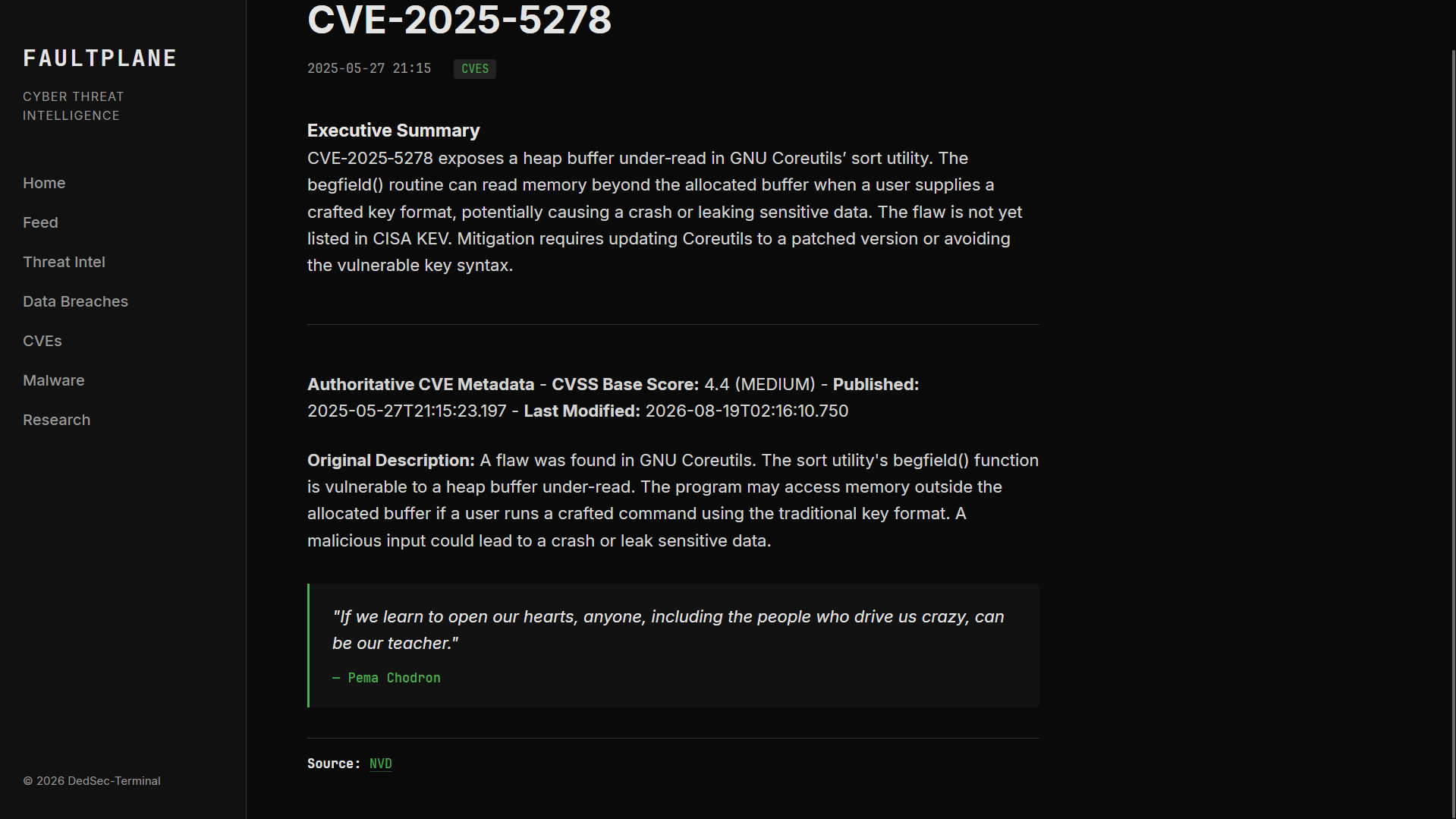
| Category | Primary Focus & Sources |
|---|---|
| Threat Intelligence | State-sponsored operations, APT campaigns, phishing campaigns, identity threats (The Hacker News, Krebs on Security, Bleeping Computer, Schneier on Security, Microsoft) |
| Malware & Threats | Reverse engineering, ransomware operations, loader/botnet analysis (Securelist, SentinelOne Labs, Malwarebytes Labs) |
| Data Breaches | Verified breaches, leaks, credential dump disclosures (DataBreaches.net, Have I Been Pwned / Troy Hunt) |
| Security Research | Zero-day vulnerability research, protocol desyncs, fuzzing, PoCs (Cisco Talos, Unit 42, Google Project Zero, PortSwigger Research, Trail of Bits) |
| Authoritative CVEs | Newly published/modified vulnerabilities and active exploitation enrichment (NVD 2.0 API, CISA KEV, Zero Day Initiative, CISA Advisories) |
[ Curated RSS Feeds ] ───► [ rss_fetcher.py ] ───► [ Groq API ] ───► [ content/posts/*.md ] ───┐
                                                                                                  ├──► [ build_site.py ] ──► [ dist/ ] ──► [ GitHub Pages ]
[ NVD 2.0 API + KEV ] ───► [ cve_fetcher.py ] ───► [ Groq API ] ───► [ content/cves/*.md ] ────┘
- Daily Automation (24h Cycle): GitHub Actions triggers ingestion at
00:00 UTCdaily, batching updates while conserving API tokens. - Two-Source CVE Ingestion: Primary vulnerability data is pulled from the official NVD 2.0 API and cross-referenced with CISA's Known Exploited Vulnerabilities (KEV) catalog.
- Groq AI Pipeline (
groq_client.py): Uses high-throughput LLM chat completions to produce structured executive summaries and extract technical facts. - Persistent Quote System: Each article is permanently assigned a curated security/philosophical quote from
data/quotes.jsonin its YAML frontmatter. - Static Site Generator (
build_site.py): Lightweight Python generator compiling Markdown into responsive HTML/CSS.
All posts and CVEs are rendered in a clean, semantic reading order:
- Header & Metadata: Title, publish date, category tag.
- Executive Summary: Concise AI summary of technical facts.
- Authoritative Context: CVE CVSS scores, KEV alerts, or key points.
- Persistent Quote: Curated
<blockquote>and<cite>permanently bound to the post. - Canonical Source: Clear outbound reference to the original publisher or NVD advisory.
Faultplane/
├── .github/workflows/
│   └── rss-update.yml         # Daily automation workflow (runs every 24 hours)
├── config/
│   └── feeds.yaml             # Curated RSS feed definitions
├── content/
│   ├── posts/                 # Generated Markdown intelligence posts
│   └── cves/                  # Generated Markdown CVE vulnerability posts
├── data/
│   ├── quotes.json            # Curated quote collection
│   ├── rss_state.json         # Deduplication state for RSS ingestion
│   └── cve_state.json         # Deduplication state for CVE ingestion
├── scripts/
│   ├── groq_client.py         # Shared Groq AI integration with retry & fallback
│   ├── quote.py               # Quote loader and random selection module
│   ├── rss_fetcher.py         # RSS fetcher, deduplicator, and post generator
│   ├── cve_fetcher.py         # NVD 2.0 + CISA KEV pipeline
│   └── build_site.py          # Static site generator and homepage builder
├── src/
│   ├── css/style.css          # Dark-mode intelligence dashboard stylesheet
│   └── templates/             # HTML templates (base, landing, post, index)
└── requirements.txt           # Python dependencies
git clone https://github.com/dedsec-terminal/Faultplane.git
cd Faultplane
pip install -r requirements.txtCreate a .env file in the root directory:
GROQ_API_KEY=your_api_key_here# Build the static site into dist/
python scripts/build_site.py
# Serve locally
python -m http.server 8000 -d distNavigate to http://localhost:8000/Faultplane/ in your browser.
Created and maintained by DedSec-Terminal.