





I build trading platforms and then I run them. The engineering is the easy half; deciding what should exist, and what should never ship, is the job.
Fifteen years building the production systems behind systematic investing — data platforms, research platforms, and live trading pipelines. Eight years at BlackRock, then PIMCO, and currently at a global asset manager in Los Angeles.
Three times over, the same problem: closing the gap between quant research and production, so researchers can ship models without an engineering bottleneck in the way.
The trading side is the point: one code path from backtest to live, risk that fails closed, and research that is allowed to say "no edge" before money finds out.
Start here: three projects, each solving a different problem, each with a live page or code you can try: autonomous-quant-researcher (deciding what is true: an LLM proposes, code decides) · research2prod (shipping it: research code that is already production code) · mft-engine (running it: one Rust code path for backtest and live)
All November 2026, Henry Zhang, Independent Researcher. Each one pre-registered, with the code public.
- Hard to Fool: A Bounded LLM Research Loop for Quantitative Finance, and What Two Dozen Campaigns Found · arXiv:2611.06607 · SSRN An LLM proposes trading hypotheses, trusted code decides, and most of what two dozen campaigns found was a documented no.
- Short Windows, Unmodelled Costs, Unknown Cutoffs: A Pre-Registered Evidence Audit of 91 LLM Trading Papers · arXiv:2611.18934 · SSRN · data and code Of 75 papers with a trading test, half deduct no costs, the median test window is 12 months, and 98% of those whose test may overlap the model's training data do not control for it.
- Testing the Premises Behind Popular Technical-Analysis Scripts under Pre-Registration · SSRN The shared premises behind popular drawn indicators (Fibonacci levels, regression channels, ribbons, squeezes), each tested with one frozen rule: none is supported, and every one did worse than being long in validation.
- The Zero-Days-to-Expiry Put-Credit Premium from Traded Option Bars: Real, Mostly Not Drift, and Priced by First-Day Shocks · SSRN Priced from traded option bars, the 0DTE SPY put-spread premium is real and mostly not market drift, but it misses the pre-registered bar because its losses come on the first day of shocks nobody forecasts.
Work in progress, registered on OSF before any outcome is scored:
- Do GPU Rental Prices Lead Consensus Revisions? A Registered Report with a Hash-Chained Protocol (Stage 1 registered report)
- A Pre-Registered Forward Test of an LLM News Reader in Event Contracts (pre-registration)
- Can an LLM Turn Published Trading Rules into Faithful Code? (pre-registration)
- Frozen Forward Rule: Options Flow in Spot Crypto ETFs and the Two-Week Ether Return (frozen forward rule)
- When Not to Price an IPO: A Frozen Model's Pre-Stated Band for Anthropic's First Close (forward test plan)
Service: Programme committee (reviewer), AAAI-27 Workshop on Foundation Models and Generative AI for Finance (FinFM)
An LLM proposes trading hypotheses; trusted code decides whether they are true.
My own idea: an autonomous quant researcher, a bounded research loop that
borrows the fixed experiment contract of Karpathy's autoresearch and the
loop-as-artifact discipline of Loop Engineering, then adds what finance forces
on you: the model never writes code (declarative JSON
hypotheses, trusted interpretation), three chronological stages with a one-use
holdout, acceptance as a gate set rather than a metric, admission-time
de-duplication, and a hash-chained ledger that keeps every refutation.
Most of what comes back is a documented no, and the ledger keeps those too — a refutation nobody wrote down gets rediscovered, at cost, by the next person. Now open source: the runner, the declarative contract, fixed validators, the options backtest mechanics, a public pre-registration with its hash-chained ledger, and 500+ tests that need neither network nor keys.
→ github.com/henryzhangpku/autonomous-quant-researcher
Paper: Hard to Fool: A Bounded LLM Research Loop for Quantitative Finance, and What Two Dozen Campaigns Found (arXiv:2611.06607, November 2026; also on SSRN, doi:10.2139/ssrn.7682019)
The guided self-service model from my PIMCO work, rebuilt in the open. A researcher who can write working Python
still has no idea what happens after "the backtest looks good" — and the
usual answer is a quant developer rebuilding the signal from a notebook,
followed by weeks of finding out why the two disagree. research2prod removes the
conversion step entirely: the project template makes the research code
already be production code. One decorator, an as-of view a signal cannot
reach past, data contracts, a mechanical promotion gate (look-ahead,
determinism, declaration, contract, backtest floors), an immutable
certificate with a golden output, and research2prod export — a deployable bundle
with a runner, a Dockerfile and a schedule, generated without translating
anything. Every command ends by naming the next one.
→ github.com/henryzhangpku/research2prod
The systematic-trading discipline from my PIMCO work, on a modern Rust stack: an engine for mid-frequency trading, where decisions are made on minute bars and positions last minutes to hours. The reasoning signals come from where markets now talk: live Kalshi strike ladders turned into an implied distribution, and public posts scored by a fast System One classifier at about 120 ms a post. Code, not the model, decides.
One event loop runs backtest and live paper alike, so research and production cannot disagree. Risk fails closed; replay is deterministic to the decision fingerprint; every idea tried goes on a hash-chained experiment ledger, kept or killed; and a test fails the build if an order path or a secret ever appears. The engine decides in about 2 microseconds.
It reads 331 live perpetuals across five venues and where the top wallets are positioned. Results after costs are published as they came out.
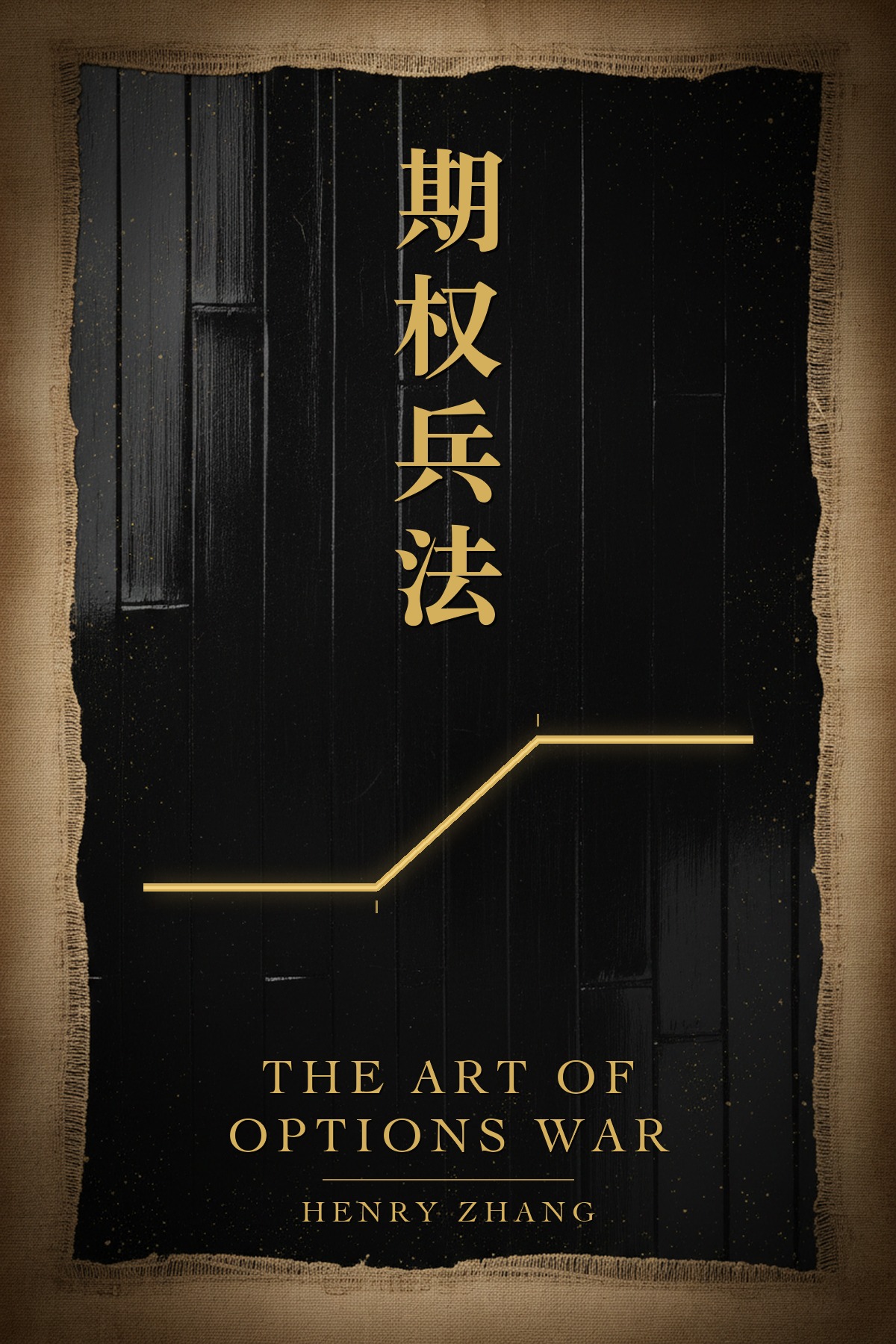
The Art of Options War · 期权兵法 Sun Tzu's thirteen chapters, read from both ends of one defined-risk options ticket: the credit-spread seller and the option buyer. The second edition absorbs The Options Underwriter and The Counted Trade. |
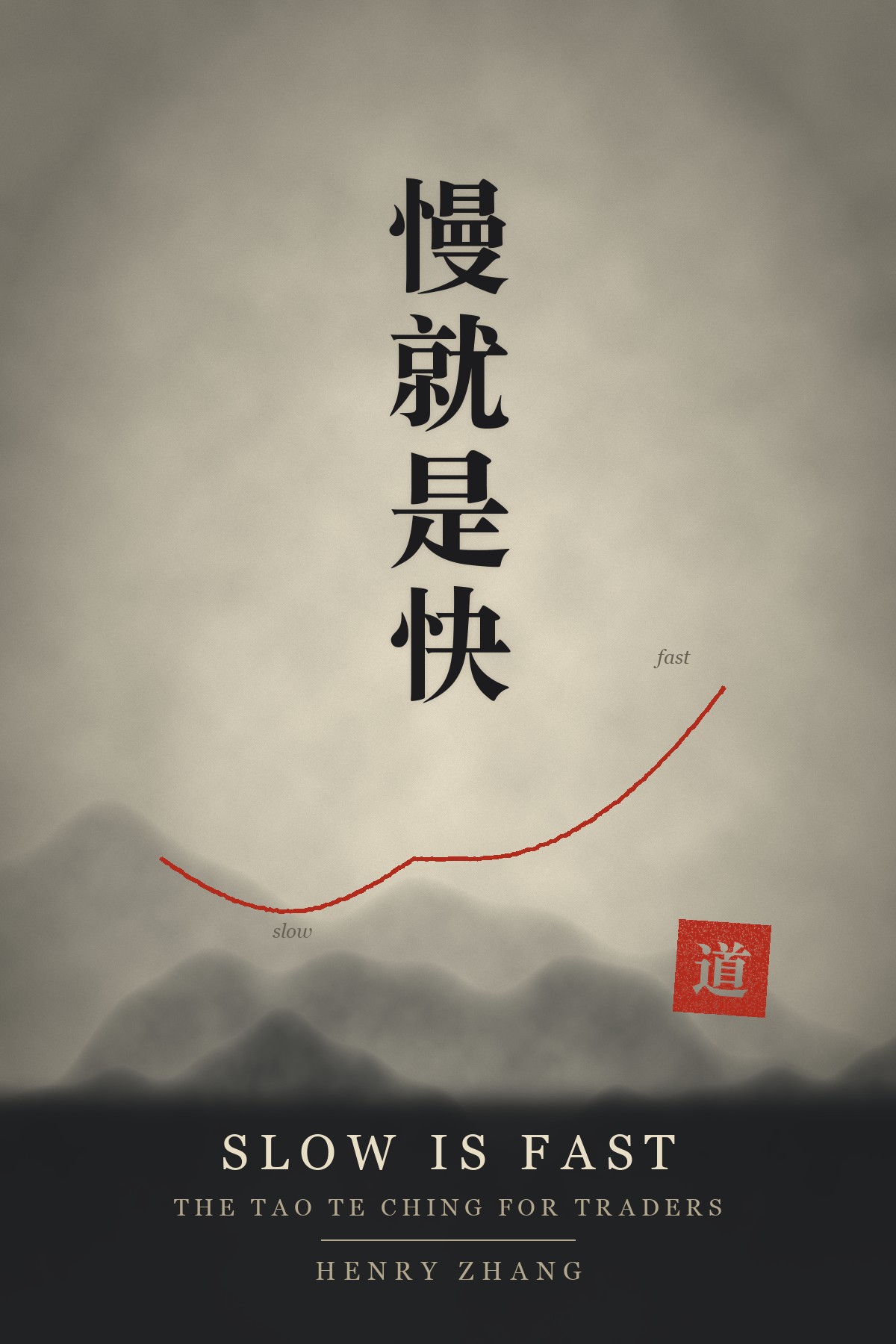
Slow Is Fast: The Tao of Trading · 慢就是快:交易道德经 Laozi's eighty-one chapters, read for the active and AI trader: one verse, one lesson, one story. Complete. |
Both bilingual (English and Chinese) and free to read in the Henry Zhang Books app. No forecasts, no signals, no performance claims.
For reference, the same discipline outside Python, each with a live page: tickforge (C++20 tick store and parameter sweeps) · java-bidder (Java 21, hard-deadline bidder) · rails-nl-screen (Rails 8 plain-English screen).
| autonomous-quant-researcher | An LLM proposes trading hypotheses, trusted code decides — staged holdouts, gate sets, and a hash-chained ledger of every refutation. Paper: arXiv:2611.06607, SSRN |
| research2prod | Write the signal once; it is already production code — the guided bridge from quant research to a scheduled, audited job |
| mft-engine | Mid-frequency trading in Rust: Kalshi probability ladders and classifier-scored posts as signals, code as the gate, one code path for backtest and live paper, an experiment ledger |
Everything else is on the repositories tab.
| Global asset manager | Lead Quantitative Engineer, VP — research platform (2025 – present) |
| PIMCO | Quantitative Developer / Architect, VP — systematic futures & FX trading |
| BlackRock | Quantitative Developer, VP — systematic equity signals, 8 years |
| Morgan Stanley | Commodities Developer — trading systems, Shanghai / Singapore |
MS Software Engineering, Peking University · BS Computer Science, Nankai University
LinkedIn · Substack · officialhenryzhang.com · ORCID · SSRN · arXiv