Rational
PxI Express ''Open" Game Console/Set Top Box
Rational:
For years, I've been getting progressively sicker of the gaming industry; purchasing console after console, breaking them for homebrew use, and watching the manufacturers rapidly close down support for hardware sold before the platform has officially died....
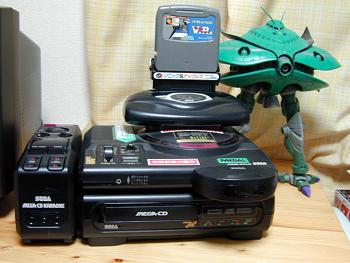
I've watched as people make huge claims ( http://arstechnica.com/gaming/2015/07/ars-reader-so-a-guy-walks-into-my-shop-with-an-infinium-phantom-console/ ) and fail to follow through, or outright fail before they even launch due to making poor technology choices, or choosing overly expensive "bling" features over core functionality.
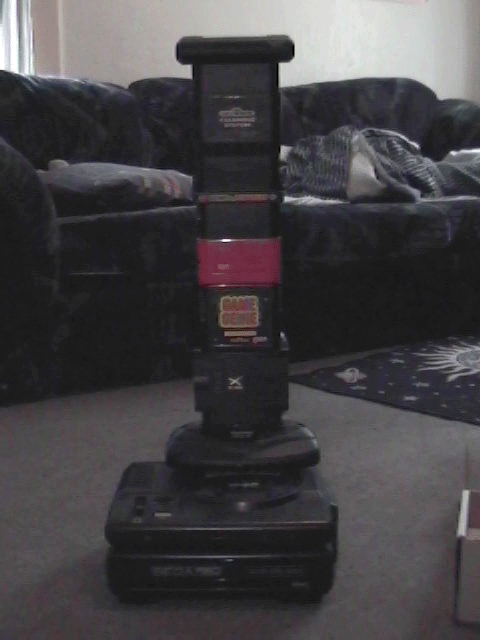 (Spot the Xband modem and win nothing at all...)
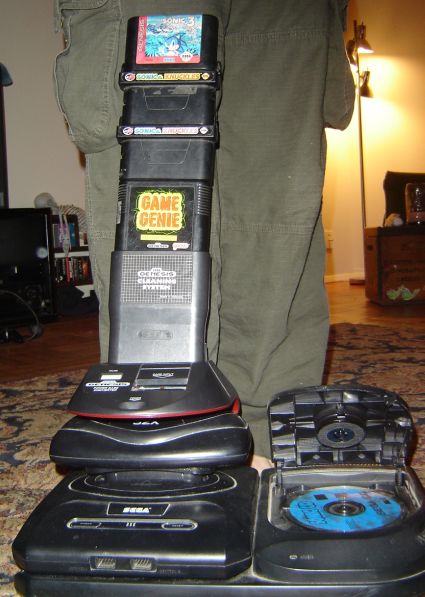
Apple computer moved from the IBM PowerPC to the Intel/AMD64 platform.
The most recent two game console set top boxes from Sony and Microsoft have been powered by an AMD64 processor provided by AMD.
One of them runs a BSD derived OS. So far as I can tell, it's locked up tight with DRM.
But of course, under the BSD license, that's quite all right.
I most recently purchased a triple-A game title called "Watch_dogs", with the intent to play it on my AMD 1100T hexcore with SLI Radeon R7 260X cards.
I purchased said GPU cards because they were supposedly very close to the same silicon that was driving the two game consoles. Surpassed them, actually.
Both in shader core count, and in clock speed. However, what I got was not very playable. First Steam downloaded the game. Then it installed Ubisoft's U-Play service.
Then it downloaded so many updates with u-play, I wanted to cry. Then steam got very angry it's local copy changed, and redownloaded everything.
After the second update cycle with u-play, I was able to launch the game (a day later than when I purchased it)
It crashed after ten minutes of play. I had to deal with updating my drivers, which then caused issues with the operating system.
I still have yet to enter into any of the storyline missions; trying to start them crashes the game.
Despite having two GPUs, each of which is singly more powerful than the game console variant, I am still unable to get playable framerates at 720p.
The console version of the game plays smoothly at 1080p, or so I hear from online reviews.
One aspect of the problem is that the game binary is built for a generic architecture to run on many PCs. Performance drops because of this.
Another aspect of the problem is that the operating system running the game is also not optimized for the hardware; and is built for a generic platform.
This is one issue that is solved simply by having a specification that is tied to a minimum hardware requirement of the AMD family 17h Zen processor and using -march=znver1 for builds targeting the PxI Express platform.
Incidentally, this type of project was pursued once before, and was ultimately successful in launching it's product.
https://www.kickstarter.com/projects/quo/projectq-run-any-os-the-unique-motherboard
They raised $189,451 and approached Gigabyte to provide the motherboard design.
http://quocomputer.com/product-category/motherboard/
As far as I can tell, it's still available for purchase, however it's quite expensive, being an Intel CPU based motherboard.
The design we are operating under does not require an expensive north bridge or south bridge chip, merely a processor socket, some PHY chips to drive ports, the ports and sockets themselves, and the passive components surrounding the PHYs and sockets.
PxI Express should be attainable at a very reasonable cost due to AMD's existing long term pursuit of a true System On Chip design.
Purpouse of the ''Top Slot":
I had a discussion with a local wafer fab about modern nanolithography processes and how it could relate to the old MASK-ROM technology used in classic game consoles. The result of the discussion was that a mask rom in the range of 128GB to 480GB was quite possible and could be likely be done for under $30 a chip. In combination with a PCI express device complex, a flash memory controller could be added to provide writable space for updates, save games, or binary game executables for multiple platforms, while keeping the large graphic and sound resources in mask rom.
This is a modern interpretation of the original golden Legend of Zelda cartridge, with 128KB of mask rom, the nintendo MBC1 page controller, and it's battery-backed 8KB SRAM. (see http://www.computerarcheology.com/NES/Zelda/ for more depth on this concept)